Blade Night : Rhythm Saber
- 4.8
- Rating
- 1.00M
- Installs
- Free
- Price

 Analysis by App-foxy
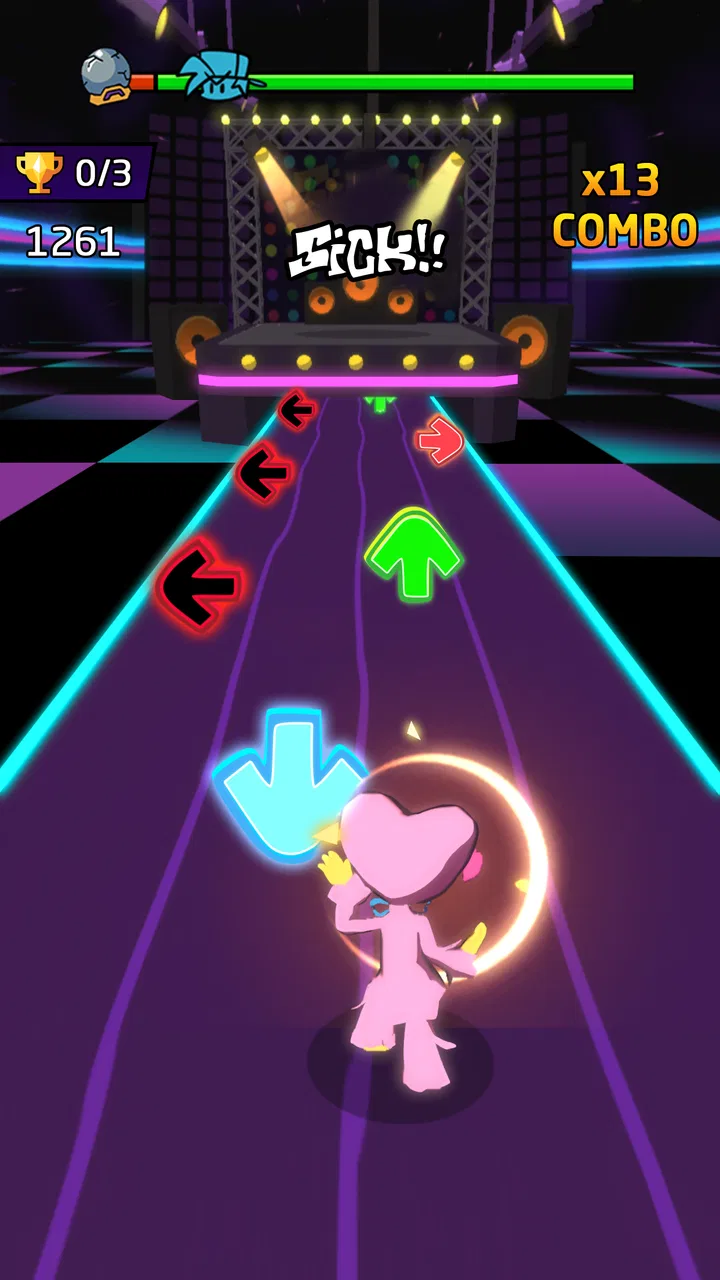
I spent time with Blade Night: Rhythm Saber as a quick music game built around movement, timing, and a bright 3D runway. It is the kind of title I can open when I have a few spare minutes and want something more active than simply listening to a song. The central appeal is easy to understand: follow the rhythm, react to what appears ahead, and try to keep the run moving smoothly.
That simplicity is also the reason it feels approachable. I did not need a long tutorial or a complicated set of rules before getting into the action. The presentation aims for an energetic night-time atmosphere, while the music-game structure gives each attempt a clear purpose. If you enjoy casual rhythm challenges and do not mind repeating stages to improve your timing, this is an easy game to try.
How the current version feels in everyday play
The current release is version 1.2.3, and the game comes from HOLA GAME. It is available as a free game for Android devices running at least Android 7.0, with optional in-app items priced from $0.99 to $1.99 each. That makes the first step low-risk: you can test the controls and decide whether the rhythm format suits you before spending anything.
You May Also Like

 Blood Strike: 2.5 Anniversary
Blood Strike’s Loadouts Turn Every Drop Into a Tactical Gamble
A close look at Blood Strike’s custom loadouts: how fast access to signature weapons reshapes its battle royale rhythm, rewards preparation, and narrows the gap between fights.

 Pandora - Music & Podcasts
Pandora’s Music Is Easy to Start, but Harder to Recover
Pandora’s strength is its low-effort path from a seed to a station. Its weak spot is how much confidence it asks you to place in connection, setup, and quiet recovery.

 8 Ball Pool
 Is Built on Rivalries, Rematches, and Routine
A close look at the rivalries, rematches, shared routines, and unanswered safety questions that turn a quick pool match into a persistent mobile community.

 Samsung Music
’s Quiet Strength Is Playing What You Already Own
Its reach comes less from spectacle than from dependable access to a personal library. That simplicity is both the app’s strongest retention engine and its ceiling.

 AccuWeather: Weather Radar
AccuWeather Review: A Quick, Clear Forecast for Everyday Decisions
For everyday plans, the best forecast is the one you can understand quickly. AccuWeather makes rain timing, radar, and local conditions easy to act on, with a few trade-offs.

 Hill Climb Racing
Why Hill Climb Racing Still Turns Crashes Into One More Run
A tiny car, a bumpy hill and one more upgrade: Hill Climb Racing keeps resurfacing because its simple chaos makes every near-miss feel personal.
More From Our News Desk
View All News


What I like most is the short-session design. I can imagine playing it while waiting for a bus, taking a break between tasks, or relaxing for a few minutes before bed. A complete attempt does not require the commitment of a long adventure game. The focus stays on immediate reactions, which makes the game easy to pick up but also places pressure on the controls and visual clarity.
The runway presentation gives the game a stronger identity than a plain tap-to-the-beat interface. Objects approaching through a 3D space make the timing feel more physical, even when the underlying interaction remains straightforward. I found that this creates a useful rhythm: watch the path, listen for the musical cue, and make the required movement without overthinking every moment.
That approach works best when I treat each run as practice rather than as a test I must pass immediately. Early mistakes can feel abrupt, especially if I look away from the action for a second. Instead of blaming the music or the controls after one failed attempt, I found it more useful to notice whether I was reacting late, watching the wrong part of the runway, or moving too aggressively.
The most important practical tip is to watch the route slightly ahead of the immediate target. Looking only at the object closest to the player encourages rushed reactions. Keeping my attention farther forward gave me more time to prepare and made the rhythm feel less chaotic. This is a small habit, but it matters in a game where the next obstacle can arrive before I have fully recovered from the previous one.
Who will enjoy the format
I would recommend this game first to people who like casual music titles with a visual action layer. It is a good match if you enjoy chasing better runs, learning patterns, and replaying a stage because one section went wrong. It may also suit players who want a lightweight alternative to larger rhythm games that demand extensive song libraries, complex menus, or long-term progression.
It is less suitable for someone looking for a deep music-production experience, a story-driven campaign, or a precise simulation of playing a real instrument. The appeal here is the immediate arcade challenge, not composing tracks or building a detailed character. Players who prefer calm listening may also find the need to react continuously more tiring than relaxing.
Families can consider it because the content rating is Everyone, but the rating should not be confused with universal comfort. A child who enjoys colorful action and repetition may respond well, while another may become frustrated by missed timing. I would let a younger player try a short session first and check whether the pace feels encouraging rather than stressful.
Learning the controls without wasting attempts
One mistake I made with this type of game was trying to play with large, dramatic movements. That feels natural at first because the runway presentation suggests a physical performance, but smaller and more deliberate inputs are usually easier to repeat. I had better results when I kept my hands relaxed and focused on consistency instead of trying to make every action look impressive.
Another useful routine is to play the opening moments as a calibration period. Rather than chasing a perfect result immediately, I used the first section to settle into the tempo and understand how quickly visual cues arrive. This helped me distinguish a genuine timing problem from simple unfamiliarity with the stage flow.
Sound matters more here than it does in many casual games. If the environment is noisy, visual reactions become more important, but the experience can feel less musical. With headphones or a quiet room, I could concentrate on the beat and make the runway feel more connected to the soundtrack. I would still keep the volume comfortable, especially during longer sessions, because repeated attempts can make a game feel louder and more intense than expected.
A third tip is to stop after a few frustrated attempts instead of forcing progress. Rhythm games can create a loop where every mistake makes the next run less focused. Taking a short break resets attention better than repeatedly tapping through the same section while annoyed. When I returned, I often noticed patterns that had seemed random before.
What the rating and audience response suggest
The game has an average rating of 4.8 from around 2.4 thousand ratings, and it has passed one million installs. Those figures suggest that the accessible music-runway concept has found a substantial audience. They also make sense when I consider how quickly the game communicates its purpose: there is no need to understand a large fictional world before enjoying the main activity.
There are 57 written reviews, which can be useful for spotting recurring reactions, but I would still judge the game through your own device and play style. A strong average score does not guarantee that every player will enjoy the same pace, control response, or repetition. Rhythm games are particularly personal because enjoyment depends on music taste, reaction comfort, and tolerance for restarting a difficult section.
In my view, the popularity is best understood as evidence that the basic loop is appealing, not as proof that it replaces every other music game. Someone who wants a quick, colorful challenge may find exactly what they need. Someone who expects a broad, carefully curated music platform may be happier with a more specialized alternative.
How it compares with familiar rhythm-game alternatives
Compared with a conventional tap rhythm game, this title puts more emphasis on the sense of moving through a space. That can make successful actions feel more satisfying because I am not only watching a line or circle; I am following a route. The trade-off is that extra visual motion can compete with the timing information. Players who prefer minimal interfaces may find a simpler rhythm game easier to read.
Compared with music games built around a large song collection, the attraction here is immediacy rather than breadth. I can start playing without first spending time organizing a playlist or learning a complicated scoring system. The downside is that players who choose games mainly for musical variety may eventually want something with a wider or more personally customizable selection.
It also differs from traditional action runners. In an ordinary runner, I might focus mainly on avoiding hazards and surviving as long as possible. Here, the musical timing gives the movement a different purpose. I am not simply reacting to danger; I am trying to make my actions line up with the track. That makes it a better choice for rhythm fans than for someone who wants endless running without musical pressure.
The free entry point is another practical difference. I can install it and decide whether the core loop works for me before considering optional purchases. I would keep that decision separate from performance, though. Spending money should not be treated as a shortcut to enjoying the controls; the important question is whether the basic rhythm interaction already feels satisfying.
Where the experience can become repetitive
The same focused design that makes the game easy to learn can also limit its long-term appeal. If I am not interested in improving timing or replaying familiar patterns, the runway action may begin to feel repetitive. This is not necessarily a flaw for a short-session game, but it is a real consideration for anyone hoping for a large, constantly changing experience.
The visual energy may also be tiring during extended play. Bright movement, quick targets, and continuous attention are enjoyable in small doses, yet they do not create the calm atmosphere of a passive music player. I would not choose this as background entertainment while multitasking because the game asks for active concentration. It works better when I can give it a few undistracted minutes.
Another limitation is the narrowness of the main idea. The game is built around its music-runway action, so players who need narrative context, character development, or strategic variety may run out of reasons to continue sooner than rhythm specialists. For those users, a larger genre hybrid would probably offer more lasting variety.
Optional purchases also deserve a sensible approach. Since individual items range from $0.99 to $1.99, the amounts are small, but repeated small purchases can still add up. I would first play the free experience long enough to know whether I am returning because I enjoy the game or simply because I am chasing a temporary impulse. That simple check helps keep the purchase decision practical.
What version 1.2.3 means for existing and new players
For a new player, version 1.2.3 provides a clear starting point without requiring knowledge of earlier releases. I would install it, play several short runs, and pay attention to whether the timing feels readable on my particular screen. Device size, touch comfort, and audio setup can influence a rhythm game more than a store description suggests.
For someone who already plays, the current version is a reason to evaluate the game as it stands now rather than relying on an old first impression. A version number tells me which build I am using, but it does not by itself change the central advice: return if you enjoy pattern learning and musical reaction, and move on if the loop feels repetitive after a fair trial.
The release history is also a useful reminder to keep expectations grounded. I would welcome future refinements that make timing easier to read, reduce visual distraction, or add more reasons to replay stages, but I would not treat those possibilities as promises. My recommendation is based on the current experience: approachable, energetic, and best suited to short bursts.
Questions to consider before installing
If you are wondering whether it works offline, whether it includes a particular song, or whether every device will feel identical, I would avoid deciding from the title alone. Those questions affect the experience, but the safest practical test is to install the free version on your own phone, check how the controls respond, and play in the environment where you expect to use it. A rhythm game that feels excellent with headphones may feel less convincing in a noisy room.
If you are concerned about age suitability, the Everyone rating makes it broadly accessible, while the more important personal question is tolerance for fast visual action. If you are choosing it for a child, try a session together and show that restarting is part of learning rather than a punishment. That makes the game more enjoyable and gives you a better sense of whether the pace fits.
If you are deciding between this and a larger rhythm title, choose based on your priority. Pick this one when you want a quick 3D runway challenge with a low entry cost. Choose another game when you need a deep song catalog, a story, instrument-style controls, or a slower and more relaxed presentation. The comparison is not about which genre is better; it is about whether this particular loop matches the way you want to play.
My recommendation after playing
I see Blade Night as a focused casual music game rather than a complete replacement for every rhythm experience. Its strongest quality is how quickly it turns a spare moment into an active challenge. The runway presentation gives the familiar beat-based format a more physical feel, and the free starting point makes experimentation easy.
Its weaknesses are equally clear: repetition may arrive for players who need constant novelty, visual intensity can become tiring, and the game is not designed for people seeking musical creation or a substantial story. I would also keep optional purchases under control until the basic experience has earned regular play time.
Overall, I would recommend it to a friend who enjoys improving through repetition and wants a bright, reactive game for short sessions. I would suggest starting with small play periods, using sound when possible, watching slightly ahead on the runway, and treating early failures as information. If that rhythm of learning and replay feels satisfying, Blade Night: Rhythm Saber has a straightforward charm that can make a few free minutes genuinely engaging.
FAQs for Blade Night : Rhythm Saber
01What is the main objective of Blade Night: Rhythm Saber?
In Blade Night: Rhythm Saber, the primary goal is to slash through incoming beats in rhythm with the music. Players use virtual sabers to cut through blocks, matching the direction and timing of the music tracks. The game combines elements of rhythm and action, creating an engaging and immersive experience.
02Can I play Blade Night: Rhythm Saber offline?
Yes, Blade Night: Rhythm Saber offers an offline mode, allowing players to enjoy the game without an internet connection. However, certain features, such as online leaderboards and multiplayer modes, require connectivity. Offline play is perfect for practicing and honing your skills when on the go.
03What are the system requirements for Blade Night: Rhythm Saber?
Blade Night: Rhythm Saber is available for both Android and iOS devices. For Android, it typically requires version 5.0 or higher, and for iOS, version 10.0 or later. Ensure your device meets these specifications for optimal performance and to enjoy the game without any technical issues.
04Are there in-app purchases in Blade Night: Rhythm Saber?
Yes, Blade Night: Rhythm Saber includes in-app purchases. Players can buy additional music tracks, skins, and other customizations to enhance their gaming experience. While the core game is free, these purchases offer additional content and personalization options for those interested in expanding their gameplay.
05Is Blade Night: Rhythm Saber suitable for children?
Blade Night: Rhythm Saber is generally suitable for players of all ages, including children. The game is rated for everyone, featuring vibrant graphics and engaging music. However, parents should be aware of in-app purchases and might want to disable them to prevent unintended spending by younger players.
Pros
- Intuitive controls enhance gameplay.
- Vibrant graphics and smooth animations.
- Wide variety of music tracks available.
- Challenging levels keep players engaged.
- Frequent updates with new features.
Cons
- Requires a stable internet connection.
- In-app purchases can be pricey.
- Limited offline gameplay options.
- Occasional ads can disrupt play.
- Higher levels can feel repetitive.

Blade Night : Rhythm Saber
Gallery